Agnipath Reforms: The Soldier’s Dignity, Security and the Nation’s Defence
Why the government’s latest decision must become an opportunity to build a younger, professionally stronger and socially secure military.
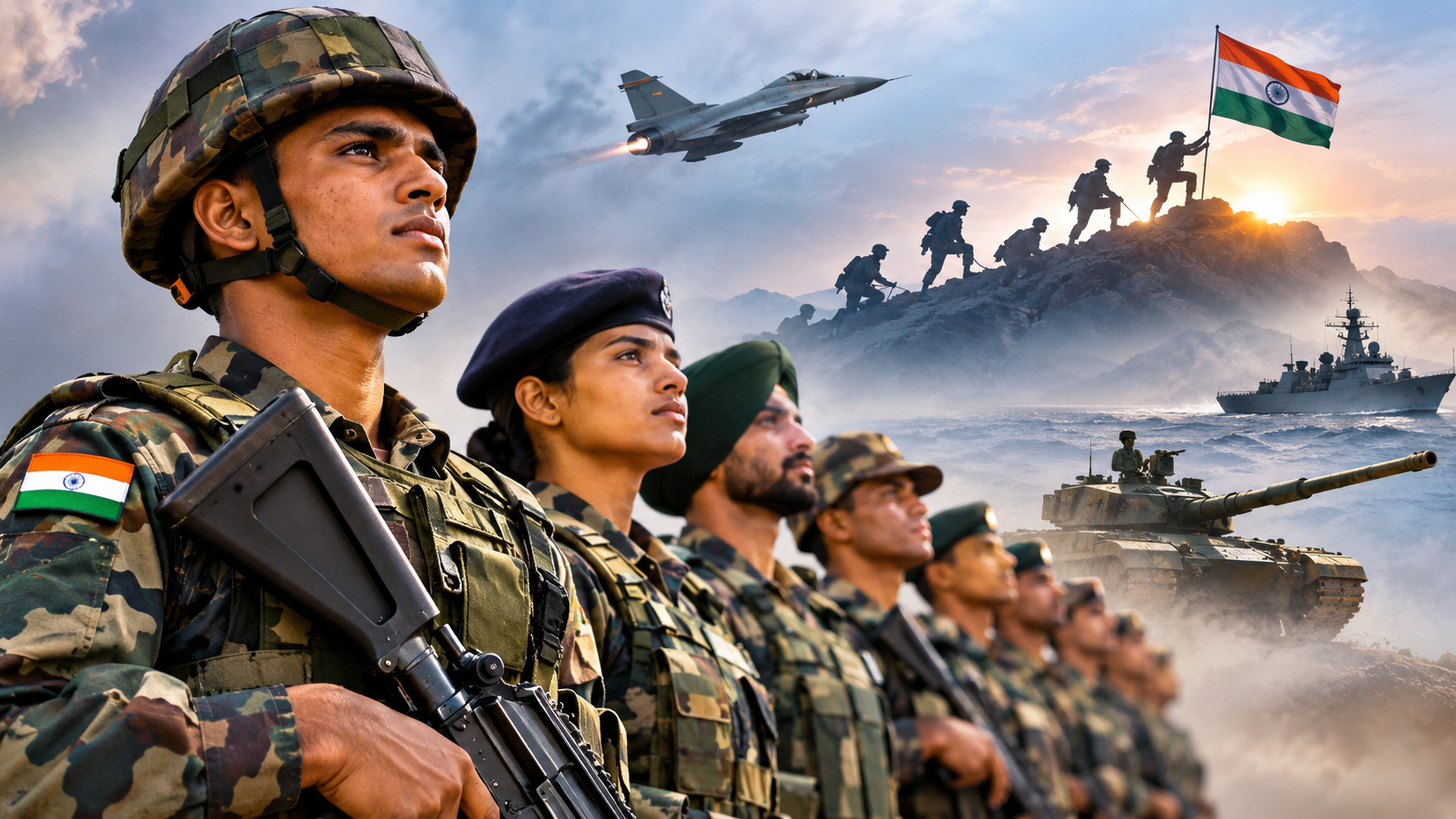
The Union Cabinet's decision of 4 November 2026 to approve an additional two-year engagement for Agniveers completing their initial four-year tenure marks an important development in Bharat's military recruitment policy. It offers further opportunities to trained young men and women while demonstrating the government's willingness to review Agnipath in the light of experience and professional assessments.
I welcome this decision. The provision to retain 25 per cent of Agniveers on merit after four years continues, while the remaining 75 per cent may undertake another two-year engagement, subject to their willingness. Following this extended period, willing personnel will have an opportunity for regular enrolment, subject to prescribed selection criteria. The revised arrangement also provides enhanced remuneration, an improved Seva Nidhi package and seniority benefits.
Agnipath was introduced in June 2022 to create a younger, fitter and more agile military, reduce the average age profile and prepare the Armed Forces for changing operational and technological requirements. These remain legitimate objectives. No major reform, however, can be perfect from the beginning. It requires periodic assessment and correction. The answer is not necessarily to reverse Agnipath, but to preserve its advantages and address its shortcomings.
The success of this reform must ultimately be measured by combat effectiveness, professional competence, institutional cohesion and the dignity and security of the soldier — not merely by a younger age profile or reduced manpower expenditure.
Trust Military Leadership and Keep National Security Above Politics
The decision comes at an important transitional stage, as the initial four-year engagements of the first Agniveer cohorts approach completion: around 21 November for the Army, 21 December for the Navy and 31 December for the Air Force. It follows professional recommendations from the Defence Services.
The Chief of Defence Staff has highlighted positive assessments of Agniveers in physical fitness, motivation, discipline and technological adaptability. Military manpower policy necessarily involves operational and professional considerations that cannot always be disclosed publicly. We must respect the experience of our military leadership while remaining open to constructive scrutiny.
Political parties should keep the Armed Forces out of partisan controversies. National security must remain above political competition.
1. Restore the Common Identity and Dignity of a Soldier
Agniveers serving alongside regular personnel in equivalent appointments should have a common professional identity. They should be recognised by their actual military appointments and ranks — Sipahi or soldier in the Army, sailor in the Navy and airman in the Air Force.
A soldier is a soldier, irrespective of the recruitment route. Those wearing the same uniform, performing comparable duties and facing similar operational risks must not be divided by unnecessary distinctions in institutional status or treatment. Administrative differences may remain where required, but they must not undermine morale, dignity or unit cohesion.
2. Formulate a Comprehensive Manpower Policy Within One Year
The government should issue a comprehensive military manpower policy within twelve months, involving the three Services and concerned ministries. It must clarify recruitment, retention, training, seniority, promotion, technical specialisation, service conditions, pension eligibility and post-service rehabilitation.
Special attention is required for technical manpower in aviation, engineering, communications, cyber operations and sophisticated equipment maintenance. Existing cohorts and future recruitment batches must receive clear, consistent rules so that serving personnel can plan their careers with confidence.
3. Clarify Service Conditions, Pension and Career Progression
Uncertainty about a soldier's long-term future remains a major concern. Under the conventional system, the qualifying service for an Army soldier in the personnel below officer rank category is generally fifteen years, subject to applicable regulations.
A critical question arises when an Agniveer completes four years, undertakes another two-year engagement and is subsequently enrolled regularly: will the initial four or six years count towards pensionable service, or will the qualifying period begin afresh?
If the initial four years are excluded, another fifteen years of qualifying service could take the total to nineteen years. If the additional two years are also excluded, it could extend to twenty-one years. These are conditional calculations, dependent on the pension rules ultimately prescribed.
The government must clearly define pensionable service, seniority, promotion eligibility, remuneration and regular enrolment conditions. A soldier should not have to make major family and financial decisions amid uncertainty about his future.
4. Protect Short Service Commission Officers and Agniveers Through Law
The prolonged difficulties faced by Short Service Commission officers over pension, ex-servicemen status and post-service employment must not be repeated in the case of Agniveers. For years, assurances without a clear, legally enforceable framework have left many officers uncertain about their future.
The government must establish three firm guarantees for both Short Service Commission officers and Agniveers: first, appropriate pensionary protection proportionate to the length of service; second, unconditional grant of ex-servicemen status on completion of prescribed service; and third, legally binding lateral absorption into CAPFs, Assam Rifles and other eligible government services. If elected representatives can receive pension under applicable provisions, those who serve the motherland in uniform must not be denied appropriate pensionary protection. These safeguards must be secured through a binding legal framework, not left to administrative assurances or the discretion of successive governments.
Post-service rehabilitation must become a national responsibility. Military training is an investment in human capital. Every individual leaving service should receive recognised skill certification, educational and vocational support, and a dependable career-transition pathway.
5. Establish Structured Absorption into CAPFs and Assam Rifles
The Ministry of Defence and Ministry of Home Affairs should jointly coordinate the absorption of eligible former military personnel into the Central Armed Police Forces and Assam Rifles. These organisations require trained personnel for border security, internal security and counter-insurgency duties.
According to the Ministry of Home Affairs, as on 1 January 2026, there were 93,139 vacancies in five CAPFs and Assam Rifles: CRPF 27,400; CISF 28,342; BSF 14,531; ITBP 12,333; SSB 6,784; and Assam Rifles 3,749.
The Staff Selection Commission advertised 53,690 vacancies in its 2025 Constable (GD) recruitment cycle, while its initial tentative notification for 2026 provided for 25,487 vacancies. These recruitment figures are distinct from the total vacancies in the forces.
On 21 July 2026, the Ministry of Home Affairs announced 50 per cent reservation for Ex-Agniveers in Constable (GD) and Rifleman recruitment categories in CAPFs and Assam Rifles, along with three years' age relaxation, an additional five years for the first batch and exemptions from specified physical and written tests.
This is a positive step, but a legally binding annual absorption mechanism is needed. Recruitment planning should match eligible personnel leaving the Armed Forces with vacancies in these organisations. Their military training and experience should receive due recognition, with only necessary force-specific orientation.
6. Integrate Recruitment with National Security Requirements
Military recruitment should be planned in relation to the combined manpower requirements of the national security establishment. The objective should not be limited to how many Agniveers the Armed Forces retain, but also how effectively trained personnel can be absorbed into other uniformed services.
The Armed Forces must retain the manpower necessary for operational commitments. At the same time, military training should benefit the nation beyond the period of service in uniform.
The Way Forward: Trust, Reform and Move Ahead
The decision of 4 November 2026 should become the foundation of a sustainable military manpower policy. Within the next twelve months, the government must resolve outstanding questions concerning service conditions, pension, career progression and rehabilitation.
I support the vision of a younger, fitter and technologically advanced military. But military strength also depends on professional competence, institutional cohesion and the dignity and security of every soldier. Constructive criticism should strengthen institutions, not weaken public confidence in them.
The objective of Agnipath must be clear: a younger military, a stronger soldier, a more professional fighting force and a more secure nation. That is the true measure of successful military reform.
Comments
No comments yet — be the first to weigh in.